


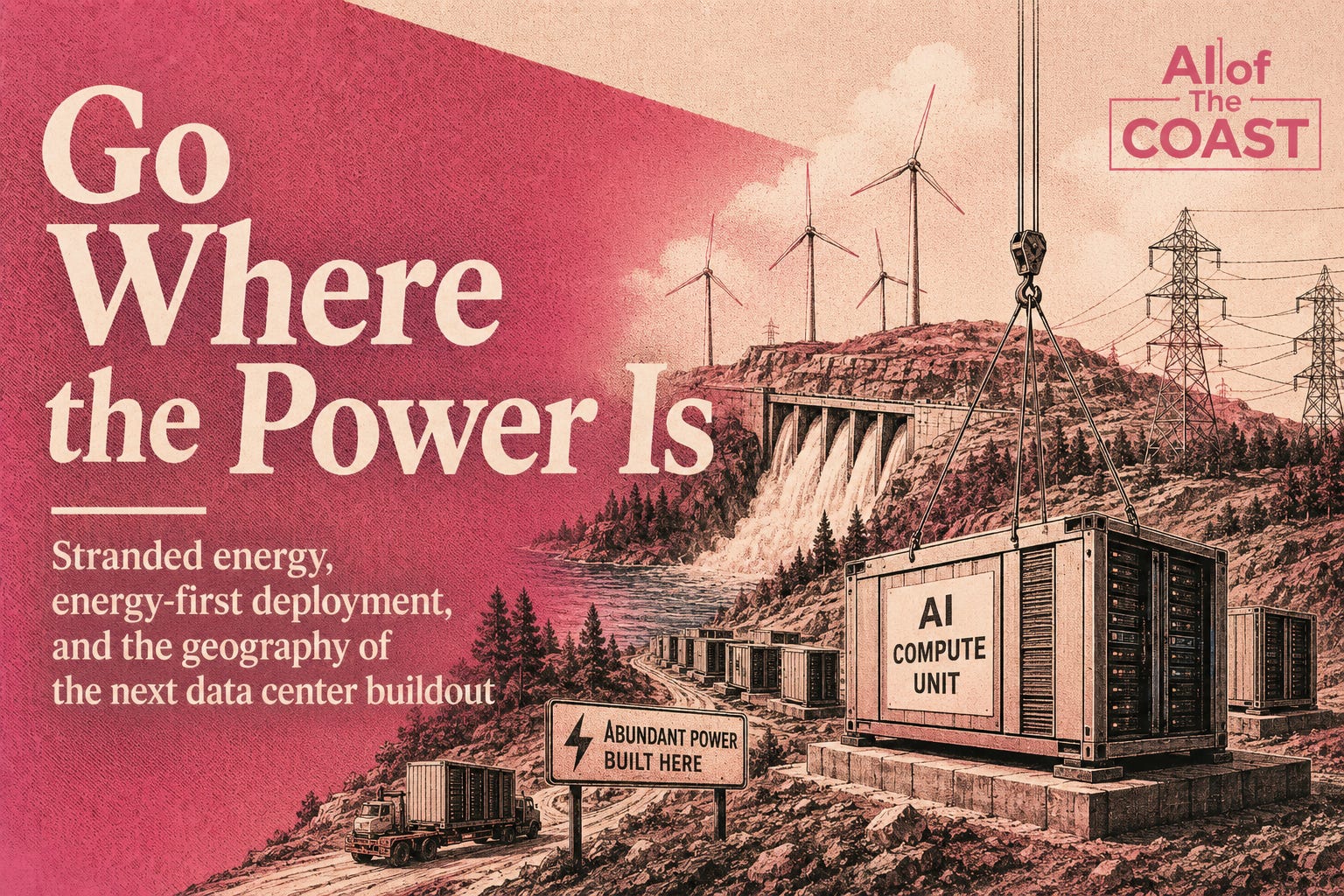
Northern Virginia is the largest data center market in the world. The concentration of hyperscale infrastructure in a region sometimes called “Data Center Alley” represents decades of accumulated investment, fiber network density, technical talent, and operational expertise. It also represents, as of 2025, a grid that is so saturated that Dominion Energy publicly acknowledged it could not meet power demand until at least 2026 despite adding over 3 GW of data center capacity.

The problem with Northern Virginia is not a failure of planning. It is a success of conventional planning applied too long past the point where the conventional model broke. When every data center in the region is competing for the same grid capacity, the same transformer supply chain, the same interconnection queue, the grid constraints become a ceiling on total deployment that no individual operator can break by deploying capital faster.
The Energy-First Inversion
The most interesting development in AI infrastructure strategy in 2025-2026 is the inversion of the site selection logic. Instead of asking “where is cheap land near fiber?” the leading operators are asking “where is available power?” And critically: not available power on the grid, but available power that can be accessed without joining a multi-year grid interconnection queue.

Stranded energy — power generation capacity that exists but cannot reach load centers economically — represents one of the most undervalued resources in the AI infrastructure buildout. West Texas has enormous stranded wind generation that cannot be economically transmitted to Houston or Dallas. The Permian Basin has associated gas that is currently being flared rather than used. Parts of the American Southwest have stranded solar generation that exceeds local transmission capacity. Hydro-rich regions of the Pacific Northwest, Scandinavia, and Iceland have generation capacity that exceeds grid export capacity.
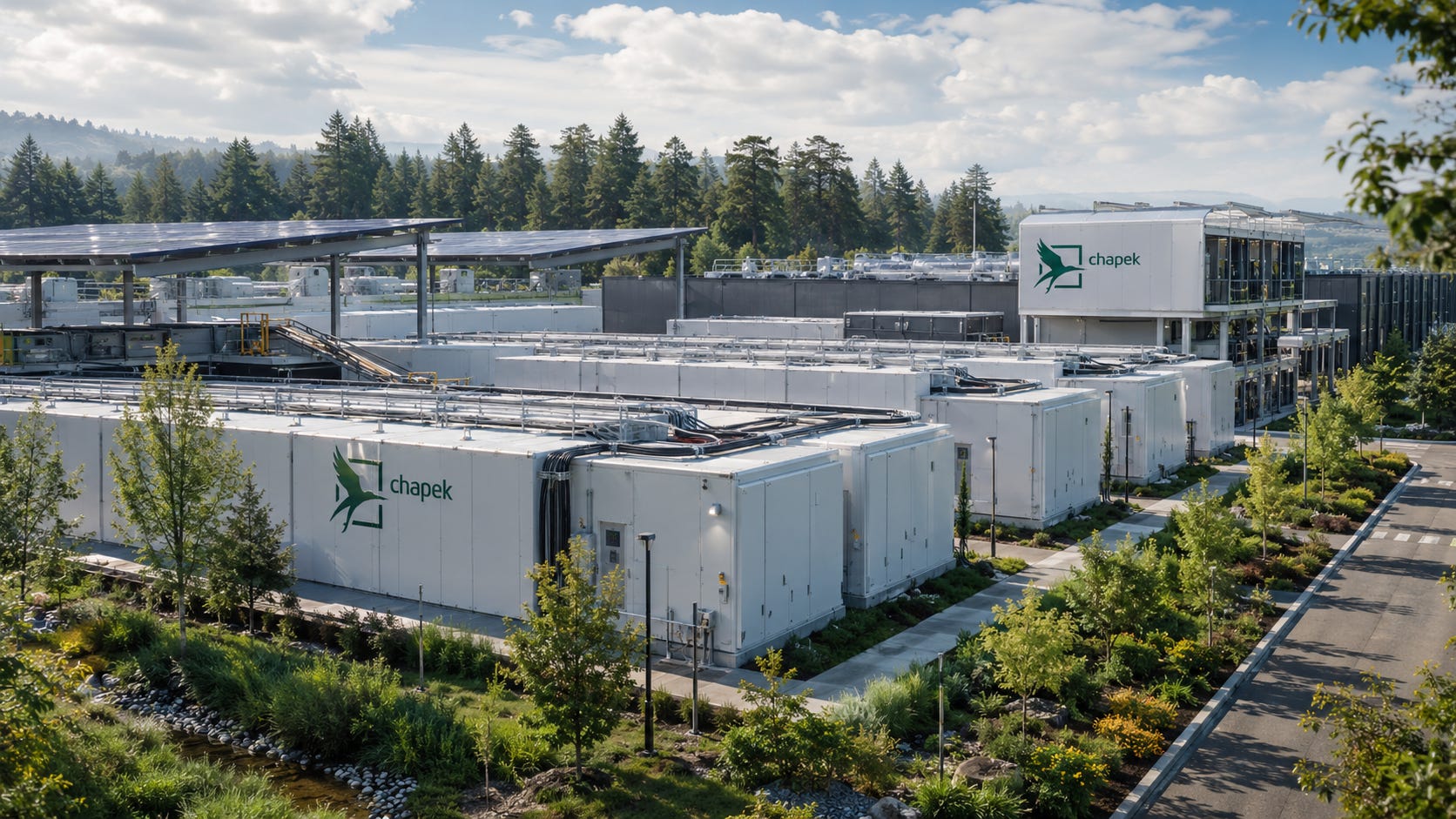
Each of these stranded energy sources represents a potential AI compute deployment site where power is available without grid interconnection constraints. Crusoe Energy’s model — build AI data centers directly at stranded energy sources, bypassing the grid entirely — is the clearest expression of this thesis in commercial operation.
“The question is not ‘where do we want to put the data center?’ The question is ‘where is the power?’ Build the compute there. The data doesn’t care about geography. The electrons do.”

The Nuclear Pivot
For AI workloads that require 24/7 firm power — which is most serious AI training and inference deployments — intermittent renewables create operational complexity. You cannot train a large language model on a schedule that depends on whether the wind is blowing. This is driving a parallel development: the hyperscaler pivot to nuclear power as the cleanest, most reliable, highest-density power source available.
Microsoft has signed agreements with Constellation Energy to restart nuclear generation capacity. Google has signed agreements for power from next-generation small modular reactor deployments. Amazon has acquired nuclear-powered data center sites. The nuclear pivot is not primarily an environmental statement — it is an engineering statement. For 24/7 firm power at densities that AI workloads require, nuclear is the best match between power source characteristics and compute requirements.
The implication for infrastructure deployment strategy: the future AI compute clusters are not going to be in Northern Virginia. They are going to be in West Texas, the Permian Basin, the Columbia River corridor, Iceland, Norway, the areas surrounding planned nuclear deployments, and any other location where reliable, abundant, accessible power exists without a three-year interconnection queue.
Modular Infrastructure Enables the Energy-First Model
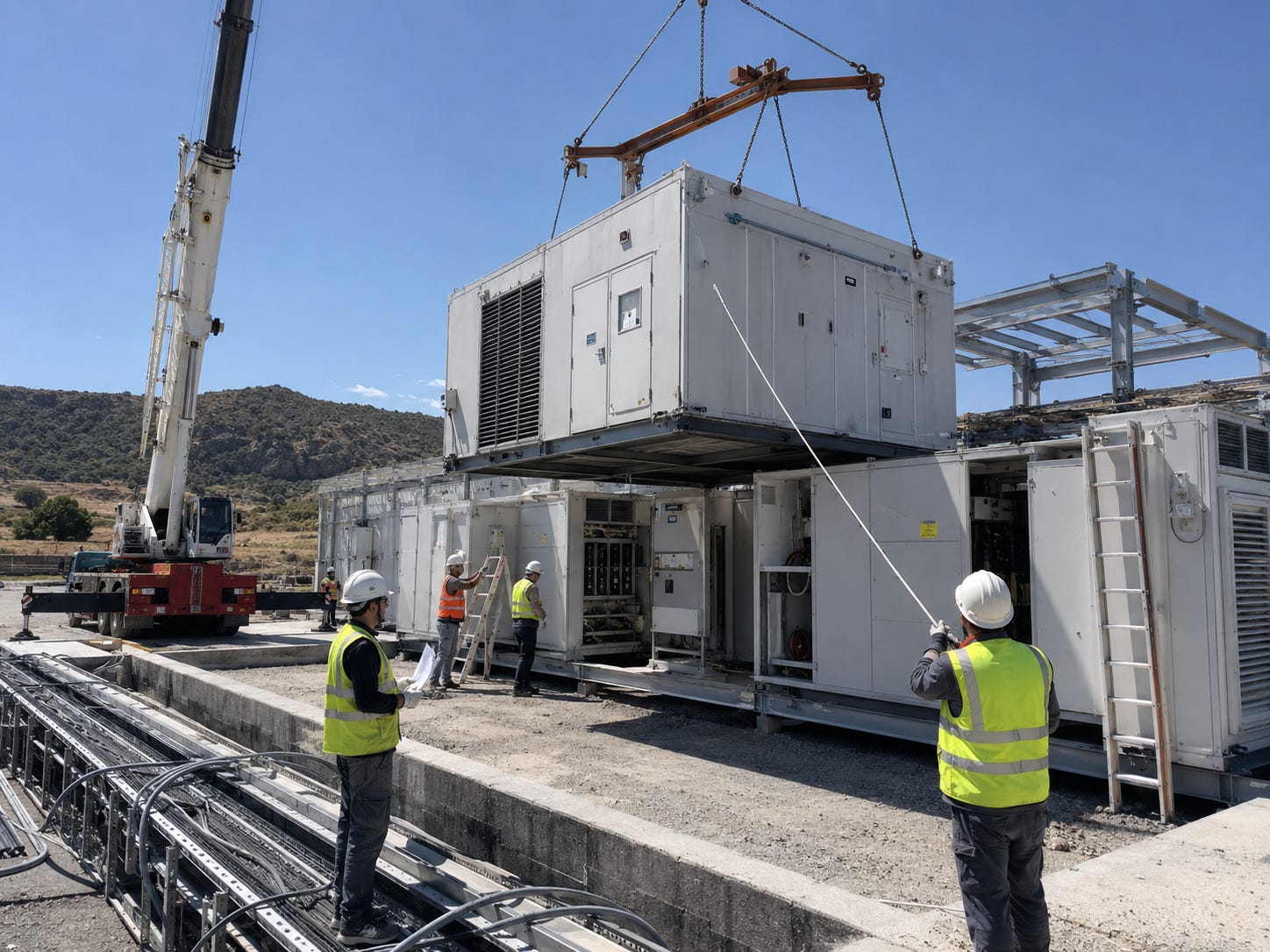
The energy-first deployment model requires infrastructure that can be deployed quickly at locations that were not previously data center sites — no existing fiber, no existing electrical infrastructure, no existing operational staff. That requirement is incompatible with hyperscale construction approaches. You cannot build a 500 MW campus in a West Texas stranded wind corridor in 18 months using conventional construction methods.
Modular data center infrastructure is the enabling technology for the energy-first model. Pre-fabricated modules can be manufactured at scale in controlled factory environments, shipped to site, connected to on-site power generation, and operational in 6-18 months from commitment. The Crusoe/Energy Vault powered shell model in West Texas is exactly this: modular compute co-located with dedicated power generation, operational in months rather than years.

Eaton and Siemens Energy’s collaboration on parallel-constructed power generation and IT infrastructure takes the same principle further: the gas turbine and the data center infrastructure are designed together, manufactured in parallel, and installed simultaneously. The result is a deployable, self-contained AI compute facility that can be sited anywhere accessible power generation is available — independent of grid constraints, fiber concentration, or conventional real estate economics.
This is the architecture of the next generation of AI infrastructure. Not cathedrals in data center alleys, but tents in energy corridors. Deployed where the power is, at the speed the demand requires, with the density the workloads demand.