

Somewhere in this market right now, someone is choosing a GPU-hour rate purely because it’s the lowest number on the page. That’s the wrong variable to optimize, and it’s costing them more than the discount is worth.
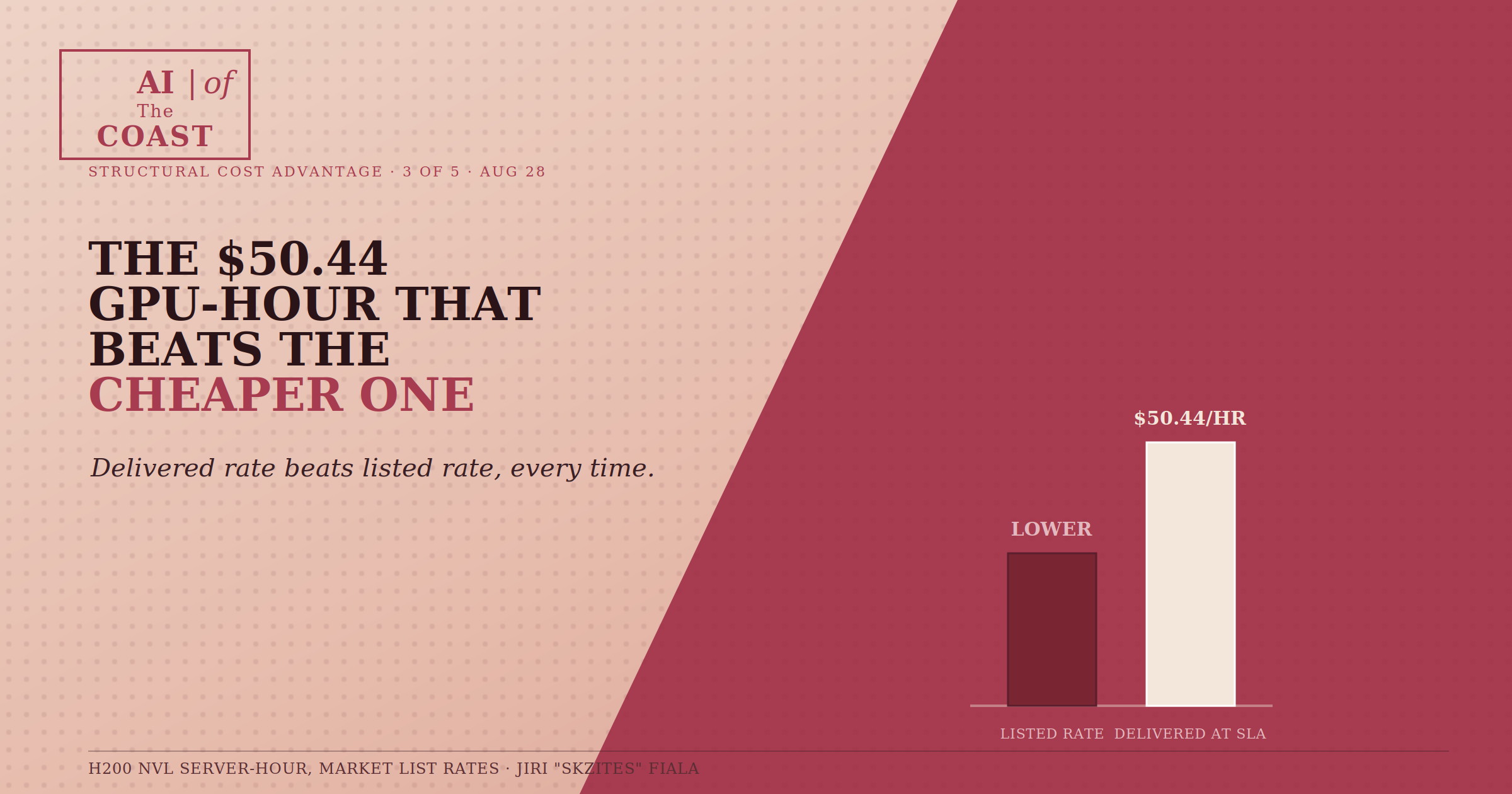
Here’s the counterintuitive part. List rates in this market for H200 NVL run around $50.44 per server-hour, B300 nearer $80.00. Both numbers sit above some of the stripped-down capacity you can find elsewhere. And both are still the better deal, because the price on the page isn’t the price you actually pay, it’s the price you pay per hour the hardware is actually available and running at the utilization you were promised.
A cheaper rate on capacity that’s oversubscribed, throttled, or sitting behind a queue you didn’t know existed isn’t a cheaper rate. It’s a deferred cost with a worse SLA attached. The real comparison isn’t dollars per GPU-hour listed. It’s dollars per GPU-hour actually delivered, at the reliability you were sold, and that number rarely appears anywhere in the sales conversation.
This is the same mistake as pricing the chip instead of the month it takes to turn on, one section over. The sticker price is the easy number to compare. The delivered number is the one that determines whether the deal made sense a year later.
Structural cost advantage was never about being the cheapest line on an invoice. It’s about what a dollar actually buys once you account for everything the invoice doesn’t show.
Subscribe for the next piece, or download the market report for the full pricing comparison.