

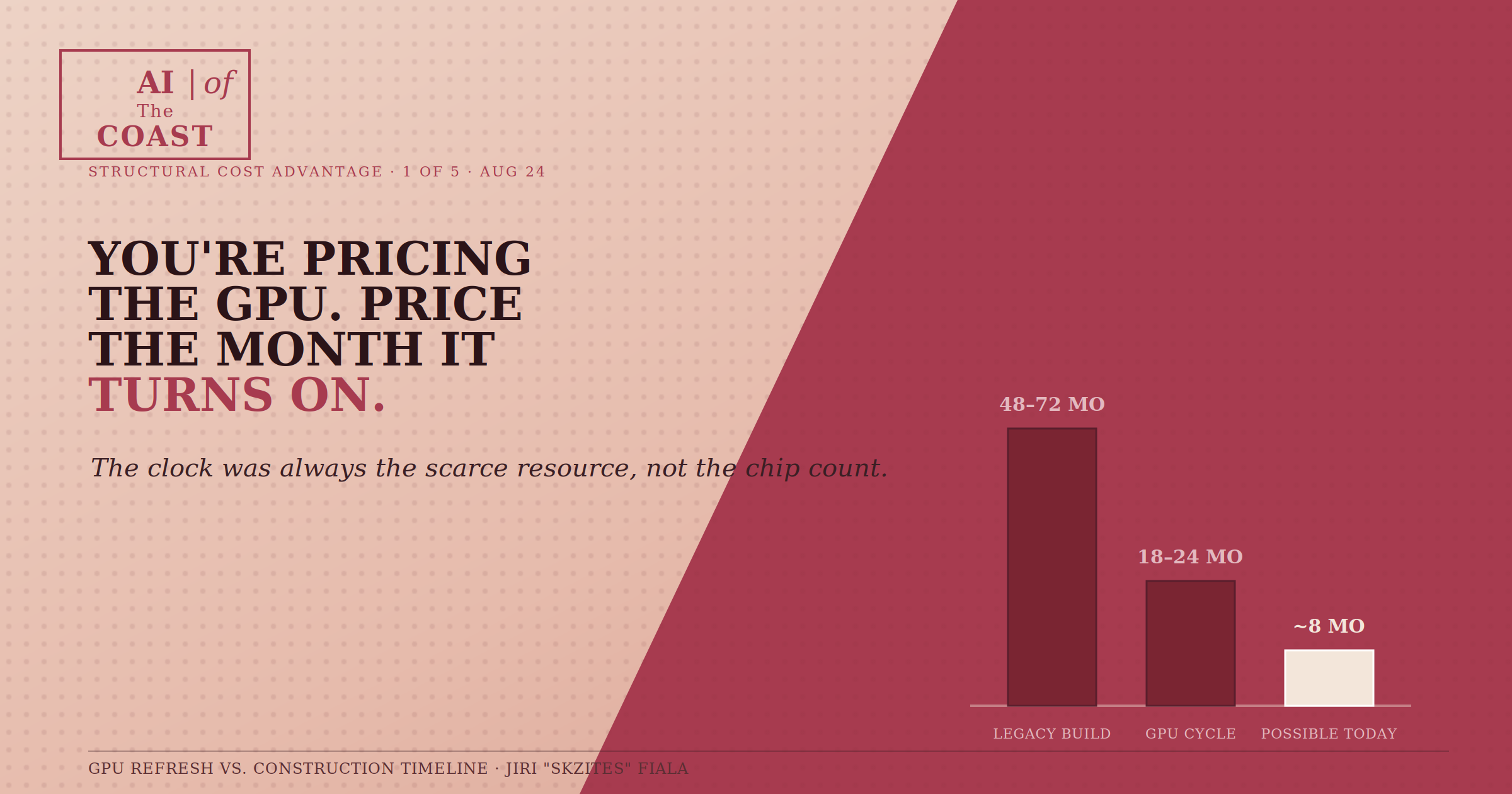
Two AI infrastructure deals can have the exact same GPU count, the exact same chip generation, and produce wildly different returns, for a reason that never shows up on the spec sheet: how long it takes to go from signed order to a running rack.
GPU performance doubles every 18 to 24 months. Traditional data center construction runs 48 to 72 months. Do that math once and it stops being abstract: a facility built on the old timeline is sized for hardware that’s already two generations behind by the time it’s live. You didn’t just wait four years. You bought four-year-old compute at today’s price.
The industry has spent a decade optimizing GPU procurement, allocation strategy, generation timing, and almost no attention on the build timeline itself, as if it were a fixed cost of doing business rather than the actual lever that determines whether the hardware you bought is still competitive when it turns on.
The industry doesn’t lack the components to build faster. It lacks the incentive to prioritize it, because build speed doesn’t show up on the same spec sheet as GPU count, and nobody’s diligence process rewards a builder for shaving eighteen months off a timeline nobody asked them to shorten. That’s not a claim about speed for its own sake. It’s the difference between deploying hardware that’s current and deploying hardware that’s already aging out, before it’s even switched on.
Price the month it takes to turn on. The chip count was never the scarce resource. The clock was.
Subscribe for the next piece, or download the market report for the full build-economics breakdown.
What's going to break first: grid capacity, the capital markets' ability to fund the buildout, or public opinion?