

Open any diligence deck in this sector and count the pages. GPU generation, financing terms, maybe a logo slide near the back. Now count how many pages are dedicated to the one variable that predicts whether the project exists at all.
Usually zero.
Interconnection.
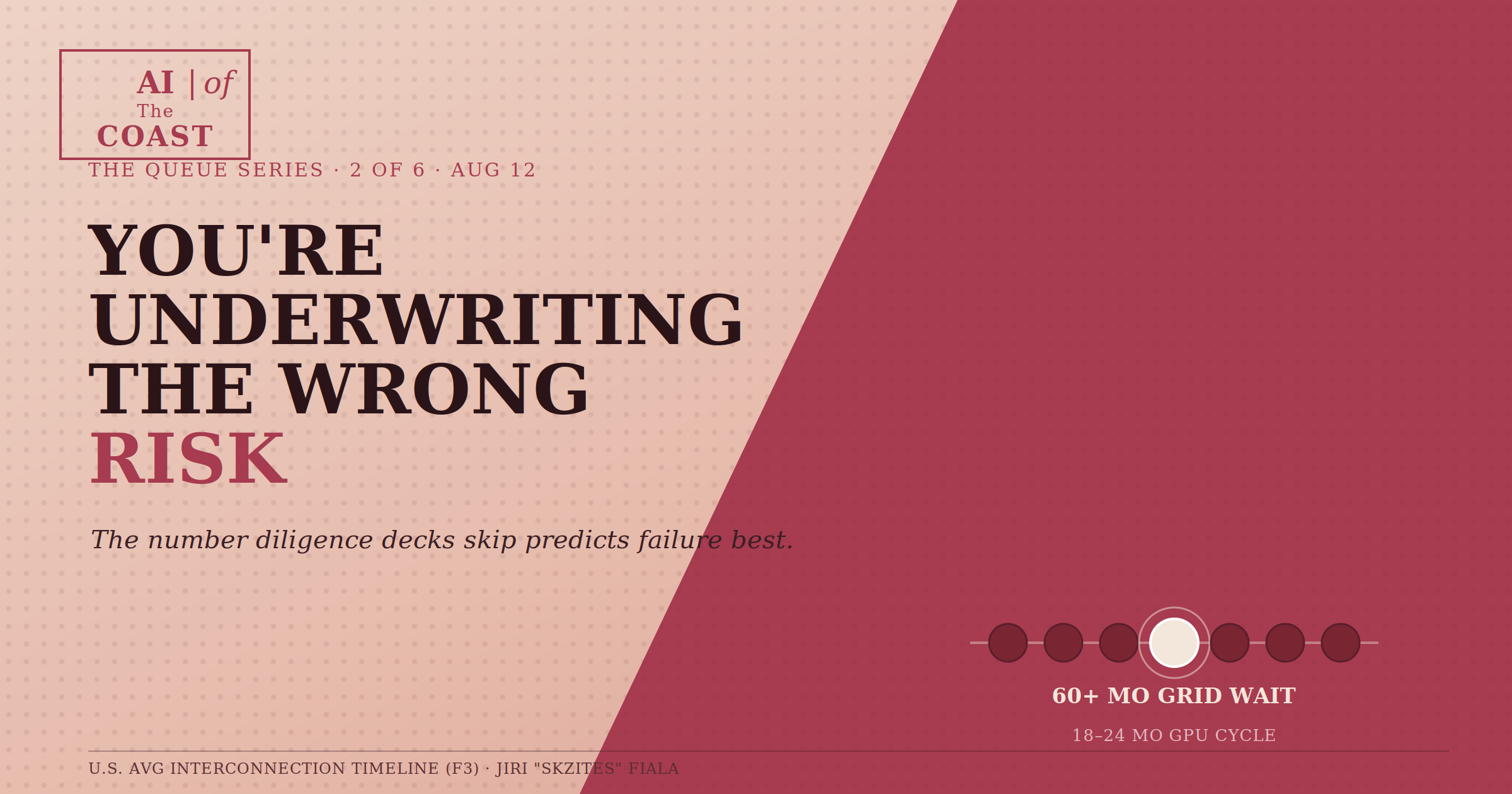
Grid interconnection in the U.S. averages 60-plus months. In parts of Europe, industrial-scale connections run three to seven years. Meanwhile GPU performance doubles every 18 to 24 months. Do the arithmetic: by the time a traditional facility clears the queue and energizes, the compute it was sized for is two full generations obsolete. That’s the best case. The worse case is it never clears at all.
You can have the tightest financing terms in the market, a term sheet your lawyers are proud of, and still be underwriting a project that never generates a watt. The financing structure doesn’t know that. The GPU spec sheet doesn’t know that. Neither one carries any information about whether the project clears the one gate that actually matters.
Queue position does. It’s the one line item most diligence checklists have never had a row for, because it’s not a number a sponsor controls, and sponsors don’t love putting uncontrollable variables in the middle of their own pitch.
That’s exactly why you have to ask for it before you ask for anything else. Not because it’s comfortable. Because it’s the only number in the deck that isn’t self-reported.
Subscribe for piece three, or download the market report for the full risk breakdown.